

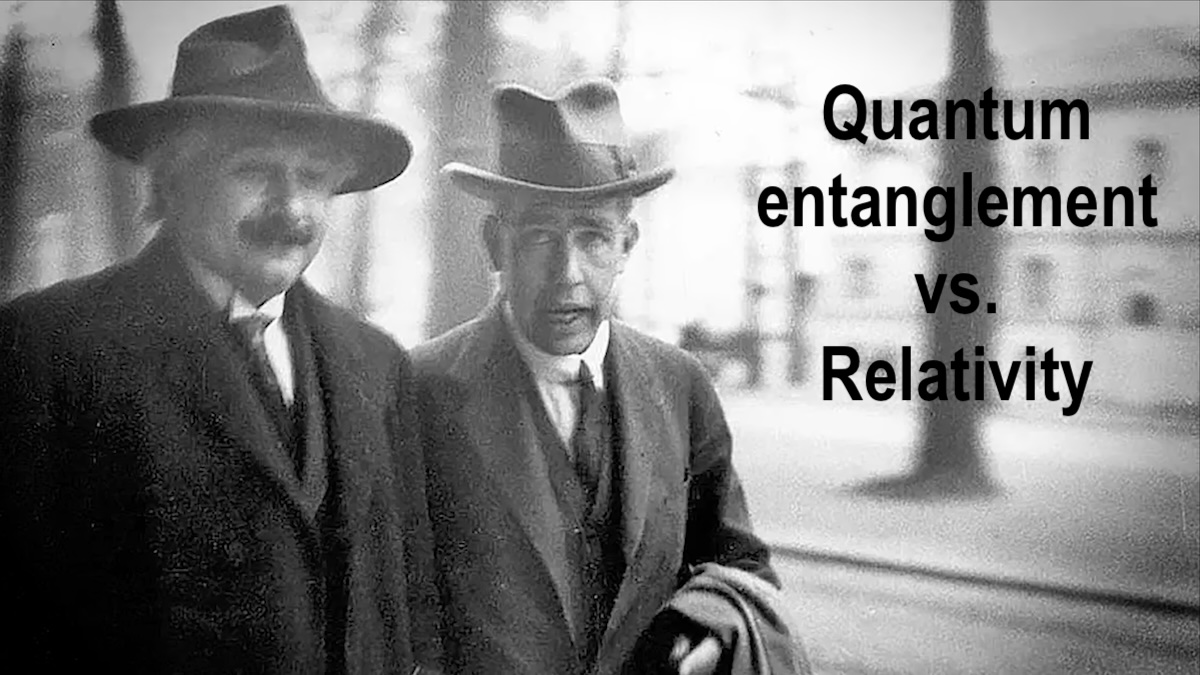
How an argument between Einstein and Bohr changed quantum mechanics forever.
Correction: 30:53 Electrons and Positrons not Protons
0:00 The Speed of Gravity 3:07 Spooky Action at a Distance 5:21 The Copenhagen Interpretation 9:12 The EPR Paradox and Hidden Variables 17:25 Einstein vs Bohr 20:51 John Bell and Entanglement 22:14 Bell’s Theorem 29:30 The Bell Inequality Test 33:41 The Most Misunderstood Experiment in Physics 35:06 The Locality Problem 40:37 The Many-Worlds Interpretation
References: Adam Becker (2018). What is Real?. Basic Civitas Books – ve42.co/WhatReal Einstein-Podolsky-Rosen paradox via Wikipedia – ve42.co/EPRWiki Einstein, A. et al. (1935). Can Quantum-Mechanical Description of Physical Reality Be Considered Complete?. American Physical Society (APS) – ve42.co/EPR Solvay Conference via Wikipedia – ve42.co/SolvayConf Owen Willans Richardson Photo Galley via nobelprize.org – ve42.co/SolvayPhoto Bohr-Einstein debates via Wikipedia – ve42.co/BohrEinDeb Bacciagaluppi, G and Valentini, A (2009). Quantum Theory at the Crossroads. Cambridge University Press – ve42.co/Crossroads Bohr, N. (1935). Can Quantum-Mechanical Description of Physical Reality be Considered Complete?. American Physical Society (APS) – ve42.co/BohrResp The Solvay Conference via rarehistoricalphotos.com – ve42.co/SolvayImg Kragh, H. (2022). Chemists Without Knowing It?. Firenze University Press – ve42.co/BhorsConferenceImg Einstein Attacks Quantum Theory. The New York Times via nytimes.com – ve42.co/EinsteinAttackQT Oral History Interviews via repository.aip.org – ve42.co/BohrInterview
Learn more:
- Quantum mechanics. Wikipedia and Grokipedia
- Quantum entanglement. Wikipedia and Grokipedia
- Quantum Darwinism. Wikipedia and Grokipedia
- Quantum computing. Wikipedia and Grokipedia
- Quantum decoherence. Wikipedia and Grokipedia
- Quantum tunneling. Wikipedia and Grokipedia
- Quantum biology. Wikipedia and
- Grokipedia Quantum biology is an emerging interdisciplinary field that explores the application of quantum mechanics to understand and explain biological processes at the molecular and cellular levels, where classical physics alone is insufficient to account for observed efficiencies and phenomena.[1] It investigates how quantum effects, such as superposition, coherence, tunneling, and entanglement, may play functional roles in living systems, potentially enhancing processes like energy transfer and sensory detection beyond what classical models predict.[2] The field originated in the early 20th century with ideas from physicists like Niels Bohr, who in 1932 speculated on quantum principles in biology during his lecture “Light and Life,” but it gained modern traction through experimental advances in spectroscopy and quantum chemistry starting in the 2000s.[1]
- One of the most prominent areas of quantum biology is photosynthesis, where light-harvesting complexes in plants and bacteria achieve near-100% quantum efficiency in energy transfer from antennas to reaction centers.[2] Studies of the Fenna-Matthews-Olson (FMO) complex in green sulfur bacteria have revealed long-lived electronic coherences lasting hundreds of femtoseconds (e.g., ~300 fs) at physiological temperatures, suggesting that quantum superposition allows excitons to explore multiple pathways simultaneously for optimal energy funneling, though recent analyses indicate that some observed oscillations may arise from vibrational rather than purely electronic effects, raising debates on their functional significance.[3][4] Quantum tunneling of electrons and protons also facilitates rapid charge separation in photosynthetic reaction centers, preventing energy loss.[2]
- Another key example is avian magnetoreception, where birds use the Earth’s magnetic field for navigation through a quantum radical pair mechanism in cryptochrome proteins located in their eyes.[1] In this process, light absorption generates spin-correlated radical pairs whose singlet-triplet state oscillations are modulated by the weak geomagnetic field (approximately 50 μT), enabling directional sensing; experimental evidence includes magnetically sensitive reactions in isolated cryptochromes and behavioral disruptions in birds under radiofrequency interference that affects spin dynamics.[5]This mechanism, first proposed in the 1970s by Klaus Schulten, exemplifies how quantum spin effects can provide biological advantages in weak-field environments.[1]Quantum biology also encompasses enzyme catalysis and olfaction. In enzymes, proton and hydride tunneling accelerates reaction rates by allowing particles to pass through energy barriers rather than over them, as demonstrated in hydrogen transfer reactions where kinetic isotope effects support non-classical behavior.[2] For olfaction, the vibrational theory posits that odorants are distinguished by inelastic electron tunneling that detects molecular vibrational frequencies, with experiments on fruit flies showing altered responses to deuterated acetophenone, which shifts C-D vibrations.[1]However, the field faces challenges, including the decoherence problem—where environmental interactions rapidly destroy quantum states in warm, wet biological settings—and ongoing debates about whether these effects are truly adaptive or merely incidental.[6]
- Looking forward, quantum biology holds promise for bioinspired technologies, such as efficient artificial light-harvesting systems and quantum sensors, while advancing fundamental questions about life’s origins and complexity through multiscale modeling and experiments. As of 2025, the United Nations has declared the International Year of Quantum Science and Technology, underscoring ongoing advances such as quantum effects in biological information processing.[1][7][8] Advances in techniques like two-dimensional electronic spectroscopy continue to refine our understanding, emphasizing the need for integrated physical and biological approaches to confirm functional quantum roles.[2]
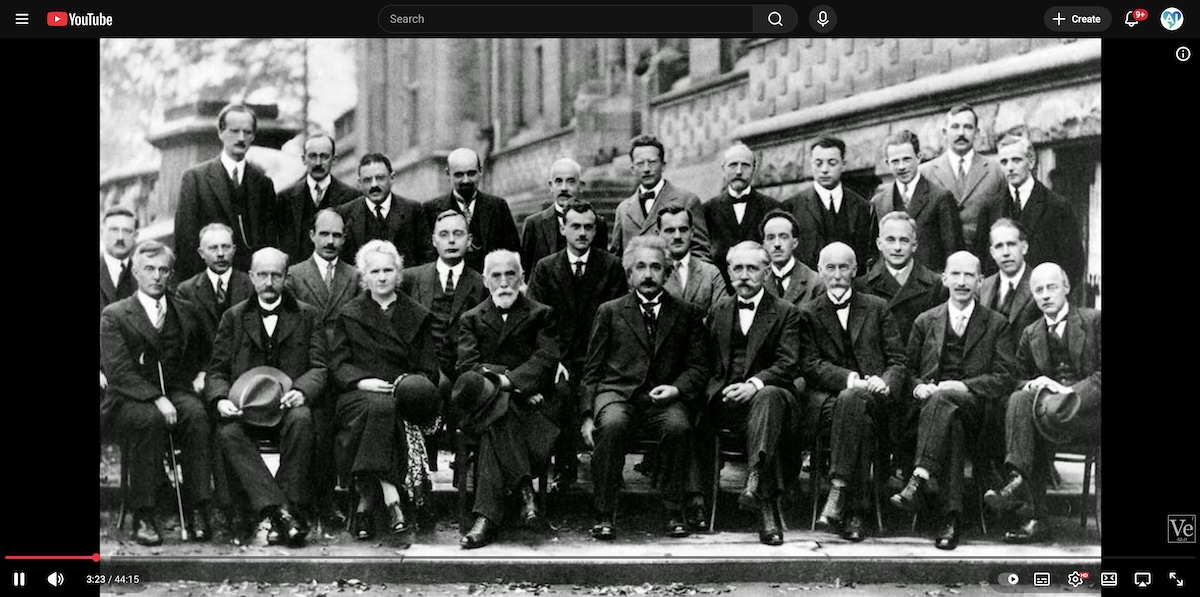
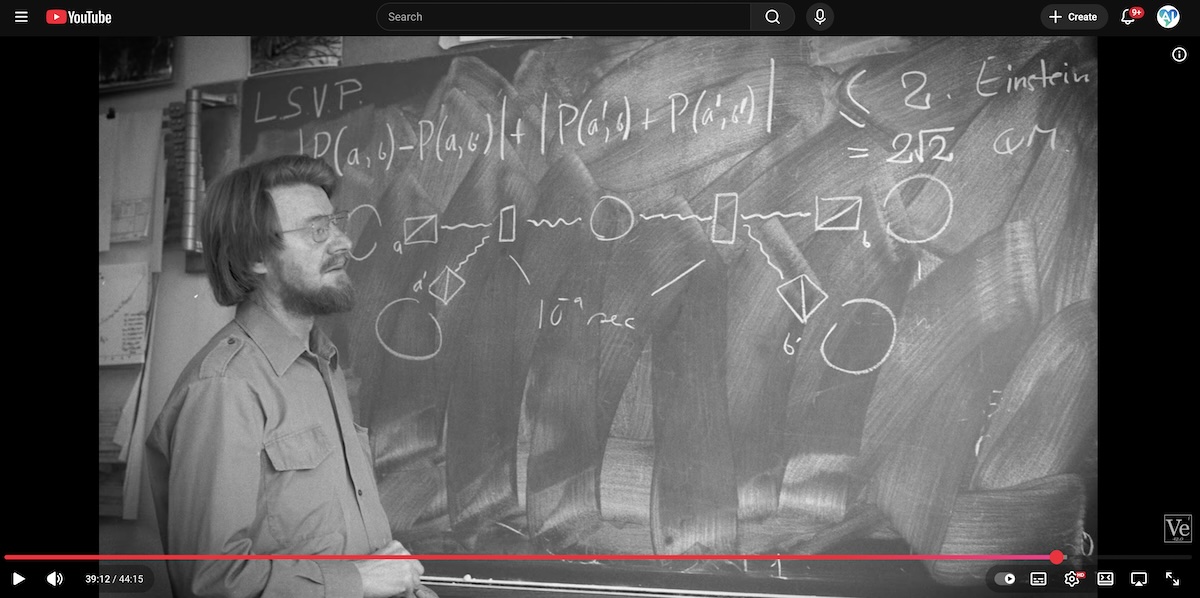
Shtetl-Optimized. The Blog of Scott Aaronson. If you take nothing else from this blog: quantum computers won’t solve hard problems instantly by just trying all solutions in parallel.
“You know, I think, you know, it is reasonable to be optimistic that yes, eventually we can get this [functional quantum computer]. Now, what is it going to be good for? You know, that part unfortunately has been massively unbelievably overinflated in the popular press, right? I’ve tried to give you a true sense of what it will be good for. You know, it will be good for quantum simulation. It will be good for breaking public key cryptography. It, you know, should provide some modest benefits from other things. For example, via Grover speedups. uh you know it can do this you know certified randomness protocols like that and maybe there are other applications that are yet to be discovered you know that’s that’s that’s entirely plausible okay but you know it is not this magical machine that just speeds up everything…” (1:45:30)
In this episode of the 632nm podcast, Scott Aaronson shares his early fascination with calculus at age 11 and how “rediscovering” old mathematics led him toward groundbreaking work in complexity theory. He gives a lucid explanation of P vs NP, revealing how seemingly trivial questions about verifying solutions speak to some of the deepest unsolved problems in all of computing. Aaronson also explores the frontiers of quantum computing, from the nuances of quantum supremacy experiments to the idea of quantum money and certified randomness. He explains how amplitudes—rather than straightforward probabilities—unlock powerful interference effects, yet still face limits imposed by measurement. The conversation concludes with a look at the future of fault-tolerant quantum computers and the possibility that we’ve finally reached the ultimate horizon of computability—unless nature has even stranger surprises in store. 02:01 Early Fascination with Mathematics 05:10 Exploring Complexity Theory 09:10 Understanding P vs NP 22:38 The Significance of P vs NP in Cryptography and AI 35:04 Mapping Problems and NP Completeness 38:37 Quantum Computing and BQP 41:41 Shor’s Algorithm and Cryptography 45:39 Simulating Quantum Systems 52:04 Digital vs Analog Quantum Computers 58:18 Grover’s Algorithm and Quantum Speedup 01:02:04 Challenges in Quantum Algorithm Development 01:06:41 Beam Splitter Networks and Quantum Sampling 01:15:22 Quantum Computing and Information Storage 01:17:24 Shor’s Algorithm and Factoring Numbers 01:20:56 Google’s Quantum Supremacy Demonstration 01:49:19 Quantum Money and Unclonable Cash 01:57:15 The Future of Quantum Computing
“Quantum Computing and modern machine learning have one enormous commonality that they are both based on linear algebra in very in very high dimensional spaces right and so whatever intuitions you have about linear algebra…” (31:39)
In this episode, Ron interviews Scott Aaronson, a renowned theoretical computer scientist, about the challenges and advancements in AI alignment. Aaronson, known for his work in quantum computing, discusses his shift to AI safety, the importance of aligning AI with human values, and the complexities involved in interpreting AI models. He shares insights on the rapid progress of AI technologies, their potential future impacts, and the significant hurdles we face. 00:00:00 – Introduction 00:02:23 – Scott’s Path to AI Alignment 00:04:09 – Early Interests in AI and Quantum Computing 00:04:54 – The Rationality Community and Early Skepticism 00:10:10 – OpenAI and the AI Alignment Problem 00:20:01 – Interpretability and AI Models 00:33:14 – Watermarking Language Models 00:40:54 – Ethical Considerations and AI Detection 00:42:43 – Future of AI and Insights from OpenAI 00:49:06 – The Importance of AI Warning Shots and Final Thoughts
What happens when brilliant minds clash on the facts? Nobel Prize winner Robert Aumann reveals his groundbreaking mathematical proof that rational people with the same basic assumptions cannot agree to disagree—and what this means for markets, conflict, and human cooperation. What you’ll hear:
- The remarkable story of Aumann’s “aha moment” 50 years ago
- A simple story that makes complex game theory accessible
- Why enormous trading volumes puzzle economists
- The concept of “common knowledge” and why it matters
- Real implications for resolving disagreements
Professor Aumann shares how his three-page paper sparked thousands of research articles and fundamentally changed how we think about conflict and cooperation. This conversation explores both the mathematical elegance of the Agreement Theorem and its practical applications for anyone interested in how rational minds can work together toward truth. About Robert Aumann: Robert Aumann won the 2005 Nobel Prize in Economic Sciences for his groundbreaking contributions to game theory and our understanding of conflict and cooperation. He is Professor Emeritus at the Hebrew University of Jerusalem and one of the most influential economists of our time. About the Hosts: Victor Haghani, founder of Elm Wealth, previously co-founded Long-Term Capital Management and spent over a decade at Salomon Brothers. James White serves as CEO of Elm Wealth. Together, they authored “The Missing Billionaires: A Guide to Better Financial Decisions.” The Agreement Theorem isn’t just abstract mathematics—it’s a blueprint for how rational minds can work together toward truth. In a world often divided by seemingly intractable disagreements, Aumann’s work offers hope.